Located in the lower Verona area, the town of Legnago is an unmissable historical and cultural landmark just a few kilometers from Verona . Reminiscent of its famous military past, Legnago stands along the Adige River and is a convenient base for anyone visiting Verona , Mantua, or Padua , or simply wanting a comprehensive tour of the towns in the Verona area.
Legnago enjoys a strategic location, to say the least, and has thus undergone various occupations in the past, from the Lombards to the Habsburg Empire. The medieval fortress-city still bears witness to that past, making it a source of considerable cultural interest. Here, culture is in the air and is experienced actively and engagingly: here's what to see in Legnago, and beyond.
The historic center of Legnago
Legnago's historic center sees a significant tourist influx year-round. In addition to welcoming and affordable accommodations, tourists appreciate the cultural life of Legnago's historic center and its unique history. This history has ancient origins, dating back to prehistoric times and then to the Etruscans, but which can be traced back primarily to Legnago's golden age: the Middle Ages, a period in which Legnago's role as a stronghold and its strategic importance were highlighted.
Evidence of this is the fortifications, of which the ancient Porta Mantova remains, near Piazza Garibaldi, and the Neoclassical cathedral dedicated to San Martino Vescovo and located in Piazza della Libertà. In addition to being a military center, Legnago was also a very prosperous city economically, a factor that revived the city's artistic and cultural side.
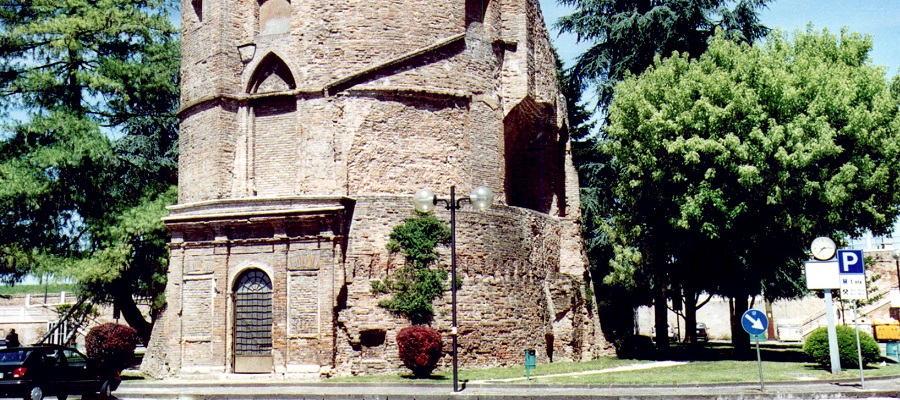
The church of San Salvaro, now a FAI property, houses a beautiful Pietà , demonstrating the artistic movement that flourished during that period, along with other votive statues and works from the Veronese school. There is no shortage of Venetian-style buildings, used by the Austrians to fortify the Quadrilatero, which also included Mantua, Peschiera, and Verona. Of the once great fortified city, only a few sections of the ancient castle remain, particularly the Torrione , formerly used as a prison, located in the main Piazza della Libertà.
In Legnago, however, you can't help but stumble upon monuments commemorating the internationally renowned musician Antonio SalieriThe Teatro Salieri, a majestic opera house still alive and well, is dedicated to him. It's a prolific cultural center that offers an interesting theatrical program.
Also worth seeing are the Bell Tower of San Rocco, dating back to the 17th century and the last survivor of the demolition of the church, the Historical Museum of the Palazzo Fioroni Foundation, which preserves authentic medieval finds such as swords and armour, and the Archaeological Museum, a building that houses several prehistoric finds from the surrounding plains with an interesting section dedicated to the necropolis.
Exploring the surroundings of Legnago
The lower Verona area lends itself to interesting tours that explore the cultural, social, and industrial life of the town. Legnago, in particular, is today one of the main industrial centers in the area. Not far away, you can visit the village of Cologna Veneta, founded in 170 BC. Or Villafranca di Verona, another large industrial center of Verona, home to the Nicolis Museum of Automobiles, Technology, and Mechanics, a true gem for lovers of transportation and its evolution. Another village in the heart of the Verona plain is Zevio, also along the Adige River, which lends itself to an exceptional cultural visit.
Legnago represents just part of a larger, particularly productive plain for industry and culture, as well as a peaceful and pleasant starting point for a tour of the Veronese plain and the city of Verona. For this reason, booking an apartment online quickly and stress-free in Legnago is a truly smart way to plan a grand tour of the Veneto.

