You don't have to be an art enthusiast to know about the Venice Art Biennale: a priceless international exhibition that annually brings together works by great artists. Venice possesses a rare ability: to transform every major event into an experience that doesn't remain confined to a single frame but extends to the entire city, its rhythms, its habits, and permeates it.
The Art Biennale is one of those moments when all this becomes even more evident: in 2026, the 61st International Art Exhibition officially opens its doors on May 9th and remains open until November 22nd, bringing one of the most anticipated cultural events of the year back to the lagoon, titled InMinor Keys. The perfect opportunity not only to explore the city of Venice in all its everyday splendor but also to appreciate the beauty of contemporary art, an art that speaks to society and addresses current, philosophical, and interior themes, universalizing them.
The Venice Art Biennale thus becomes an ideal setting for those who want to discover the city but also have a unique and unrepeatable experience in direct contact with art.
What to Expect from the Venice Art Biennale
The Venice Art Biennale, the International Art Exhibition organized by the Venice Biennale, is an event built around a central exhibition and a system of national participations that makes the city a meeting point for artists, curators, and audiences from diverse backgrounds. More than a simple exhibition, it is an observatory on the present: each edition attempts to interpret the times we live in, choosing a curatorial direction capable of fostering a dialogue between sensibilities, languages, and visions.
Talking about the Art Biennale also means talking about Venice, a city that isn't just a backdrop but becomes an active part of the story: it welcomes, reflects, amplifies, and accompanies the visitor on an experience that often continues beyond the exhibition spaces.
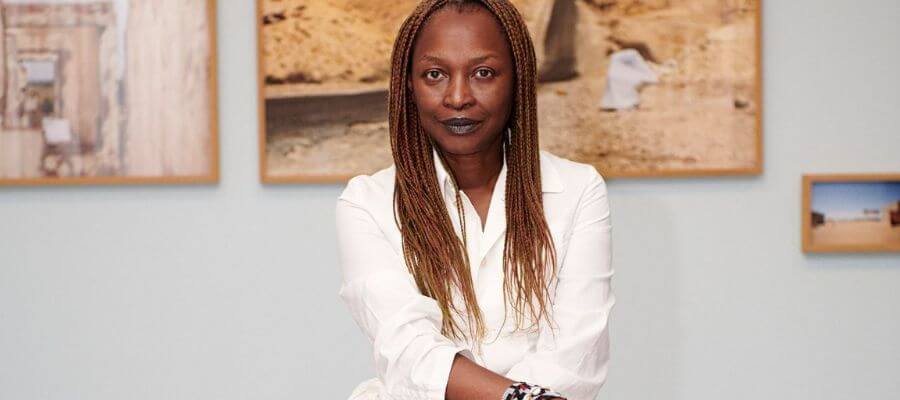
This year, the Art Biennale officially opens on Saturday, May 9th , and closes on Sunday, November 22nd, 2026, but the pre-opening will take place on May 6th, 7th, and 8th. The award jury was announced in April, and this year the entire exhibition is dedicated to the artist Koyo Kouoh, who passed away in 2025. She was appointed Artistic Director of the Visual Arts Department in November 2024 and had already developed her curatorial project.
In Minor Keys: The Meaning of Koyo Kouoh's Project
The 2026 edition is titled In Minor Keys and is rooted in the curatorial vision of Koyo Kouoh. After his passing in 2025, the Biennale decided to stage the exhibition following the project he had envisioned, together with his family and team.
It's a weighty detail, one that immediately lends depth to the entire edition. There's the sense of a legacy respectfully preserved, but also of an exhibition not created to make a splash: it was created to remain faithful to a voice, a thought, a specific curatorial sensibility. Born in Cameroon and established as one of the most influential curators of our time, Kouoh founded the RAW Material Company art center in Dakar and became director of the Zeitz MOCAA in Cape Town, the museum that houses the largest contemporary art collection in Africa. The Biennale board appointed her curator for 2026, making her the first African woman to hold this role.
The title borrows the musical language of "minor keys" and evokes introspection, melancholy, grief, low frequencies, and a less spectacular emotional dimension. In the project's presentation, the invitation is to shift our attention from the brightest lights to fragile ecosystems, small worlds, forgotten islands, and realities that often remain on the fringes of the mainstream.
This suggests a different approach to art: not by rushing to see the most photographed work, but by listening; not by the urge to see everything, but by the opportunity to linger on what resonates most gently and, for this very reason, leaves a deeper impression. The exhibition features over 111 artists, collectives, and organizations from around the world.
The aim is to construct a relational geography based on encounters and convergences, with a conceptual core articulated in a series of motifs and thematic sections, such as " Are o Shrines," dedicated to Issa Samb and Beverly Buchanan. Samb is the founder of the Laboratoire Agit'Art in Dakar, the curator's mentor, and Buchanan is an artist with a sculptural and Land Art practice, capable of interrogating memory and territory with her monumental art.
The procession motif, borrowed from Afro-Atlantic traditions and also harking back to the carnival of the city of Venice, is very interesting, creating a union between art and spirituality, narrative and symbols.
Performance art will play a key role in altering perceptions throughout the exhibition. A prime example of this approach is the Austrian Pavilion, which has chosen to focus on choreographer and performer Florentina Holzinger. Her project, titled SeaWorld Venice, will transform the space into an underwater theme park and a mechanical organism inhabited by performers for the duration of the exhibition, with site-specific actions also taking place throughout Venice and the lagoon.
How to experience the Venice Art Biennale at its best
Such a dense edition, focused on active listening and a complete, corporeal experience, requires time, attention, and a willingness to be surprised: it is precisely here that the Biennale encounters the most authentic meaning of travel.
The heart of the event unfolds between the Giardini and the Arsenale, flanked by venues and buildings scattered throughout Venice's urban fabric. This layout makes the visit particularly fascinating because it forces you to move around, to change perspectives, to move from a pavilion to a fondamenta, from an installation to a hidden courtyard.
And it is precisely here that the Biennale reveals one of its most beautiful qualities. It cannot be visited in one go: it is traversed in fragments, through intuitions, through pauses, and ends up blending into the real city, that of the streets, the bridges, the walking routes, and the slow pace.
During the exhibition months, Venice demands not only to be visited, but to be lived in. Choosing a rental apartment allows you to alternate the emotional intensity of the pavilions with a morning stroll before the crowds, or a return home to calmly process the images and sounds. It's the greatest privilege of a successful trip: not just seeing the art, but finding your own space to let it resonate. Discover our apartments in Venice.

