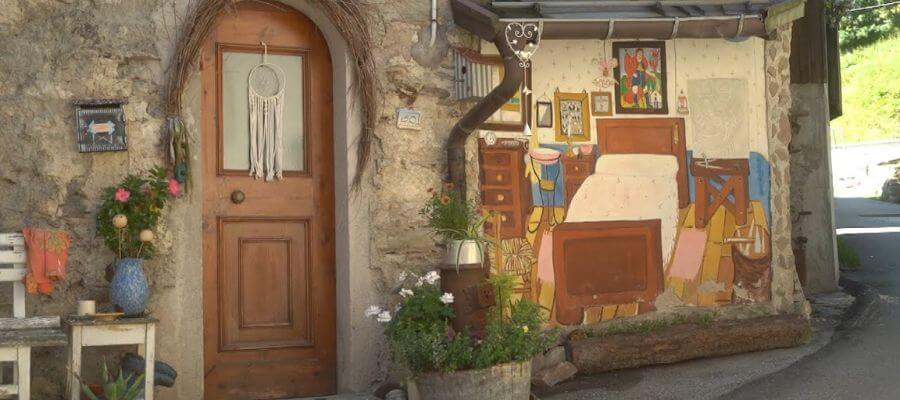
The mountain landscapes are an enchanting sight when you admire them while sitting in a village café sipping a hot coffee. The fresh air in the shade of the village buildings, the slow, leisurely pace of life among the houses nestled among the rocks, the view of the distant peaks—these are unparalleled experiences that can only be found in specific villages in the Venetian Dolomites.
Yes, because a trip to the Belluno Dolomites isn't just about hiking and hard work, but above all about discovery, exploration, and love for the region, especially those places where you've learned to live in direct contact with the mountains, their beauty, and their countless challenges.
If you're planning a fall or winter trip to the peaks of the Venetian Dolomites, you can't miss exploring the villages along the way, which will give you a different perspective on the mountains. Complete your short stay in Veneto with a day trip to the Dolomites: with a short stay in cities like Verona, Venice, Padua, or Vicenza, you'll have all the conveniences to explore independently and discover unexpected corners of the Dolomites, all while staying in a strategic city base equipped with every comfort.
Cibiana di Cadore: memories painted on stone facades
Along the provincial road of the Cibiana Pass and nestled at the foot of Mount Rite, lies Cibiana di Cadore, the famous mural town. This artistic vocation was born in 1980 from an idea by maestro Osvaldo Fabro, with the support of internationally renowned artists, designed to counteract depopulation and preserve the local artisanal heritage.
Strolling through the quiet hamlets of Masarié, Pianezze, and Col, the stone facades of the houses reveal themselves like open pages of a historical book. The murals vividly illustrate centuries-old crafts: hammering iron, ancient crafts, charcoal production in mountain charcoal kilns, and the lives of women in the fields.
With the arrival of the first cold weather and snow, the visual contrast between the dark Dolomite stone walls and the white roofs creates a hushed silence that invites contemplation. Towering above the village is the Forte di Monte Rite, a former World War I outpost now home to the Messner Mountain Museum Dolomites, offering a 360° view of Pelmo, Antelao, and Civetta.
Vigo, Lorenzago, and Lozzo: the noble cradle of the Magnificent Community of Cadore
The Cadore Center is home to villages of precious historical and cultural importance, where for centuries the Magnificent Community of Cadore has administered the forests and mountain borders.
Vigo di Cadore is the artistic guardian par excellence: at the center of town stands the Parish Church of San Martino, the ecclesiastical center of the entire valley, flanked by the small and extraordinary Church of Sant'Orsola, dating back to the 14th century. Crossing the threshold of this chapel is an immersion in a 14th-century cycle of Giotto-style frescoes, intact and luminous, from the Cadore school, dedicated to the martyrdom of the saint and stories of the Virgin Mary.
A little higher up, on a sunny plateau overlooked by the Marmarole mountains, lies Lorenzago di Cadore, known for its spacious manor houses and larch barns. Its clearings and the dense fir forest of Mirabello Park, once a summer retreat for Pope John Paul II, reveal the warm hues of beech trees in autumn before being blanketed in snow in winter. A short distance away, Lozzo di Cadore, renowned as the mill village, is worth a detour: following the course of the Rio Rin stream, a fascinating archaeological-industrial trail winds past ancient irrigation ditches, forges, and mills once powered by water.
Auronzo di Cadore and San Vito: mirrors of water on monumental peaks
Continuing your Cadore vacation along the Ansiei Valley, you'll reach Auronzo di Cadore, a village nestled on the shores of Lake Santa Caterina, a man-made Alpine lake that mirrors the Tre Cime di Lavaredo and Cadini di Misurina peaks. The village is characterized by traditional Alpine houses, built of wood and rock, with flower-filled balconies and sloping roofs made of galvanized sheet metal or wooden shingles. For this reason, it offers a splendid pedestrian walk along the shores, ideal on clear autumn days when the larches turn orange and the wooded slopes are colored with foliage. In the winter, the lake transforms into a welcoming hub for Nordic skiing and snowshoeing enthusiasts.
Heading up towards the Ampezzo valley, you'll find San Vito di Cadore, nestled in a wide, grassy valley surrounded by Mount Antelao and Mount Pelmo. Here, Lake Mosigo, bordered by coniferous forests and flat paths, offers breathtaking reflections, while the 15th-century church of the Madonna della Difesa houses a valuable altarpiece attributed to Francesco Vecellio, brother of the great Titian.
Sottoguda and Colle Santa Lucia: the Ladin soul and the high-altitude pastures
At the foot of the Marmolada massif lies Sottoguda, which is actually a hamlet of Rocca Pietore , certified among the Most Beautiful Villages in Italy. The village retains an intact rural urban fabric, characterized by a high concentration of tabià, wooden barns constructed from interlocking squared logs, and narrow cobbled streets lined with the workshops of master blacksmiths, the last heirs to a centuries-old tradition of wrought iron forging. In the winter months, the village takes on a suspended charm, with smoking chimneys and the proximity to the glaciers of the north face of the Marmolada.
Moving into the Val Fiorentina, you'll come across Colle Santa Lucia, a village perched on a steep rocky spur overlooking the western faces of Mounts Pelmo and Civetta. The town center is clustered around the Gothic church of Santa Lucia and the monumental cemetery built on the cliff, next to the Cesa de Jan, a former noble residence with 16th-century barred windows. Today, it houses theLadin Cultural Institute, dedicated to preserving the linguistic and folkloric identity of Ladin, the language spoken in the Dolomite valleys.
Following the slopes towards the Falzarego Pass, Andraz Castle stands isolated in the territory of Livinallongo del Col di Lana . This medieval military fortress was built directly next to a prehistoric landslide to control the Fursil iron mines. The village of Livinallongo, scarred by the events of the Great War, is a popular mountain vacation destination in both summer and winter, but it also comes into its own in autumn, when the colors illuminate the mountain slopes.
Fornesighe in Val di Zoldo and the rural magic of Sappada
The Zoldo Valley, meanwhile, is home to Fornesighe, one of the mountain villages with the greatest architectural integrity in the Veneto region. The town faces south on the slopes of Mount San Sebastiano and has survived unscathed by the frequent fires that ravaged the Alpine valleys over the centuries. The houses retain majestic vertical structures of stone and wood, continuous balconies, and external staircases that bear witness to rural community life. Visiting Fornesighe in autumn or with the first snowfall allows you to immerse yourself in an unspoiled and silent dimension, where the rhythms are marked by the ringing of bells and the warmth of wood-burning stoves.
If you decide to ascend the northernmost edge of the Belluno Dolomites, on the border with Carnia in Friuli Venezia Giulia, you'll see the Sappada valley opening up before you, an Alpine village of ancient German-speaking colonization. Its historic gem is Sappada Vecchia, consisting of a linear sequence of hamlets (from Cima Sappada to Cretta) composed of rural houses built entirely of wood using the blockbau technique, with logs stacked on top of each other and fitted together at the corners without nails. In winter, the snow-covered roofs and decorated balconies make a stroll along the old road a richly evocative ethnographic experience.
The villages of Valbelluna: Mel, Arsié, and the medieval gem of Feltre
Among the secret villages to discover in autumn and winter, and even before climbing to the highest altitudes of the Dolomites, Valbelluna offers fascinating historical sites that deserve a thorough visit. Borgo Valbelluna is home to the historic center of Mel, awarded the Touring Club Italiano's Orange Flag and also listed among the Most Beautiful Villages in Italy. Its Piazza Luciani is surrounded by elegant Renaissance buildings with decorated façades, including the Palazzo delle Contesse with the Civic Archaeological Museum. A short distance away, perched on a rocky cliff overlooking the Terche stream, stands Zumelle Castle, an exceptional early medieval castle surrounded by walls and a moat.
Moving towards the Altopiano dei Sette Comuni (Asiago Plateau) and the Valsugana, the mountain town of Arsié extends between terraced valleys, copses, and the shores of Lago del Corlo, a sinuous basin reminiscent of a Norwegian fjord, spanned by scenic cable-stayed bridges. Not far from these valleys lies Feltre, a magnificent walled city perched on the Colle delle Capre (Capre Hill). Strolling along Via Mezzaterra, past frescoed Venetian Renaissance-style buildings, the majestic Piazza Maggiore with Alboino Castle, and the Civic Museum, allows you to fully understand how the Serenissima Republic of Venice shaped art and architecture, reaching all the way to the mountainous hinterland.
Belluno and Cortina d'Ampezzo: the gateway to the mountains and the queen of peaks
Acting as a hinge and counterpoint between the plains and the Dolomite peaks, Belluno, known as the "Splendid City," stands on a rocky spur where the Ardo stream flows into the Piave River. Piazza del Duomo, dominated by the Cathedral with its Baroque bell tower designed by Filippo Juvarra and the Palazzo dei Rettori, is a compendium of Gothic-Renaissance architecture with a spectacular view that opens directly onto the peaks of the Schiara and the valleys of the Dolomiti Bellunesi National Park.
Finally, for those seeking the highest and most scenic views of the Veneto mountains, Cortina d'Ampezzo is the perfect destination for this itinerary. Nestled in the center of a wide valley surrounded by the Tofane, Cristallo, Sorapiss, and Cinque Torri mountains, Cortina combines the vibrant social life of Corso Italia and its artisan workshops with the historical relics preserved in the Ciasa de Ra Regoles and the Rinaldo Zardini Paleontological Museum. Visiting these villages in the colder seasons, savoring hearty traditional mountain dishes like steaming polenta, fried schiz, and wild mushrooms, transforms every day excursion into a profound discovery before returning to the warmth of your city accommodation.
One stay, many opportunities
These are just some of the villages or gems you'll find along your journey through the mountains of Veneto. Belluno leads the way for a series of mountain villages with strong identities, where tradition and natural surroundings have been intertwined for over a thousand years. These villages aren't just to be seen, passed through, and explored; they're to be experienced and lived in, to be understood: so not just walks in the woods and hot coffees in the cafés, but also cultural encounters, history museums, visits to villas, and much more.
These villages make the mountain experience real and vivid, everyday, and you can discover it thanks to the possibility of a short-term rental in Veneto. With a self-contained apartment in major cities like Venice, Padua, Vicenza, or Verona, you can experience both worlds—city and mountains—exploring, discovering, and traveling throughout the Veneto region with complete independence, while always having a place to call home.
Discover our solutions and book your stay in Veneto now!

